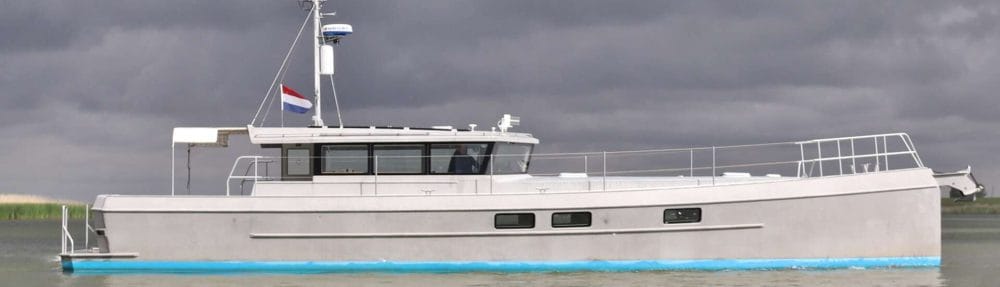
The SEA.AI Watchkeeper

A navigation & safety overview

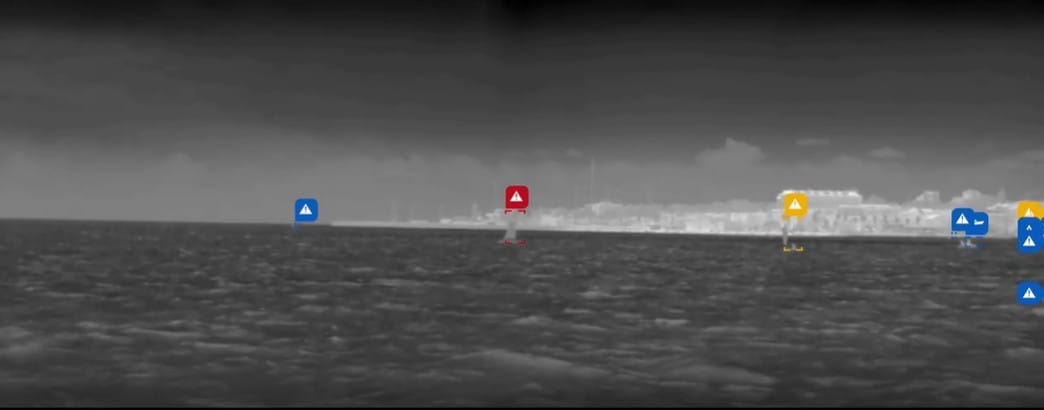
The SEA.AI Watchkeeper is a mast- or skyline-mounted AI vision system combining 4K low-light RGB cameras with thermal imaging (on most models). All data processing runs locally on an onboard edge-computing module — no cloud dependency. It integrates with your MFD or a wireless device, overlaying a live video feed with augmented-reality tags that classify detected objects and colour-code them by threat level (blue/orange/red). It also places targets on a simplified chart and triggers escalating auditory and voice alarms.
Continue reading

Stabilizers on the LRC58

and why the Sleipner Vector Fins excel


Why we want stabilizers on our LRC58

The Artnautica LRC58 is engineered for long offshore passages — often thousands of miles, with minimal crew, in open-ocean swell. This creates a compelling case for active stabilization:

  • Crew fatigue & safety: Constant rolling on long passages is physically exhausting, degrades decision-making, and increases fall/injury risk. Stabilization directly improves crew welfare.
  • Sleep quality: On short-handed passages, off-watch crew must sleep. Excessive roll makes restful sleep nearly impossible.
  • Comfort at anchor: Remote anchorages often have residual swell. Without stabilization, nights at anchor in exposed spots can be miserable.
  • Structural stress: Repetitive rolling accelerates wear on interior fittings, crockery, equipment, and the crew themselves.
  • Speed & efficiency: Active fins generate hydrodynamic lift, which can slightly improve performance and fuel economy — relevant on 5,000 nm range passages.

Continue reading

Why aluminium?

The metal born for the sea

When Dennis Harjamaa set out to design the LRC explorer yachts, one question stood at the very heart of every decision: what material would best serve an owner who intends to go anywhere, in any conditions, and stay out there for years?

The answer was aluminium — and it wasn’t a close call.

Marine-grade aluminium alloy (typically 5083 or 5086 series) is not the thin sheet metal of household objects. It is an engineered structural material, purpose-built for marine environments, combining a remarkable set of properties that no other hull material can match when the destination is the horizon itself. Continue reading

Navigation & safety equipment for our LRC 58

This is a list of the equipment we plan to have on board to support safe passagemaking, reliable communications whereever we are and the ability to share operational datalogging with our followers.

(needs some corrections/updates)

1. VHF & HF Communications

Icom IC-M605 Fixed VHF with Integrated AIS

The M605 is a fixed-mount DSC/AIS-capable VHF that does double duty: it handles standard voice communications and simultaneously monitors AIS traffic, displaying nearby vessels directly on the radio’s screen and feeding that data to the navigation network. 11 For a singlehanded skipper, having AIS awareness at the communications station — without needing to look at the chart plotter — reduces the cognitive load during a watch. The built-in automatic antenna tuner ensures optimal transmission performance across VHF frequencies. This is the primary emergency and routine communications link with other vessels, coast guards, and maritime services, and its reliability is non-negotiable. Continue reading