Hugarró’s world voyage — The route
A multi-year circumnavigation aboard an ArtNautica LRC58, departing Autumn 2027. Planned to the last season. Open to serious travellers at every stage.
The voyage
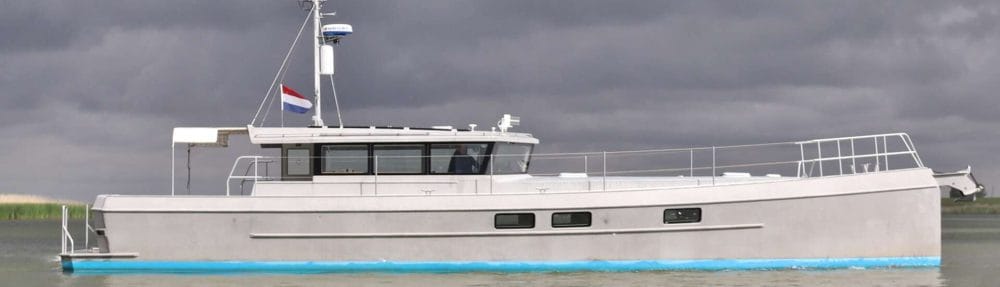
Hugarró is our ArtNautica LRC58 — a purpose-built aluminium passagemaker designed for exactly this: a sustained, serious, go-anywhere world voyage. From Autumn 2027, we follow a multi-year itinerary that takes us across every major ocean on earth, from the trade wind belts of the Atlantic to the remote atolls of the Pacific, from the Indonesian archipelago to the ice-edged waters of the deep south.
The route below is our current plan. It is detailed, considered, and built around decades of cruising knowledge — but it is also a living document. Weather, opportunity, and the occasional serendipitous discovery will shape it as we go. That is, after all, the point.
If you want to join us for a leg — whether as a prospective LRC buyer or simply as someone who wants to experience a real ocean passage — this is the page to watch. We publish our schedule well in advance so you can plan your travel and book your berth.
How we plan the itinerary
A passagemaker voyage of this scale does not begin with a map and a romantic impulse. It begins with a spreadsheet, a weather atlas, and a healthy respect for the sea’s capacity to disappoint the overconfident.
Safety is the first filter — always.
The LRC58 is an exceptionally capable ocean-going vessel: self-righting, ocean-strengthened, with 5,000 nm of range and the sea-keeping of a hull designed from the outset for open-ocean work. But capability is not the same as invincibility. The ocean demands respect, and good planning is the most effective form of seamanship.
Every leg of this route has been chosen to align with the optimal sailing season for that region — which means working with prevailing winds, current systems, and most critically, hurricane and cyclone season avoidance:
- The North Atlantic hurricane season (June–November) drives our Atlantic crossing timing — we depart the Canaries for the Caribbean in November, following the established trade wind corridor, and are well clear of the Caribbean before the following June.
- The Pacific cyclone season (November–April in the South Pacific) shapes our timing through French Polynesia, Tonga, and Fiji — we arrive in New Zealand by April and use the Southern Hemisphere winter for the Tasman and Australian east coast.
- The Bay of Bengal and Arabian Sea cyclone windows determine our approach to Sri Lanka, the Maldives, and the Indian Ocean crossing.
- The Red Sea is transited northward in winter, with favourable northward current and before the brutal summer heat.
We do not take risks with seasons. There are no prizes for being early, and plenty of consequences for being caught out.
Advanced voyage planning software
Every ocean passage is planned using TimeZero Professional — the same chart and passage planning software used by professional delivery skippers and offshore racing navigators — combined with PredictWind, which gives us access to multiple high-resolution weather models (ECMWF, GFS, ICON, and PredictWind’s own proprietary models) and offshore routing optimisation.
This means that before we leave any port, we have analysed multiple weather scenarios across the full passage, identified optimal departure windows, and routed for both speed and comfort. Guests aboard Hugarró are welcome to sit in on the passage planning process — it is one of the most instructive parts of the whole experience.
Route One — the global circumnavigation
Departure: Autumn 2027 | Duration: approximately 24–30 months
This first voyage takes Hugarró westward around the world, following the classic circumnavigation routing that has carried sailing vessels since the age of exploration — but doing it with 5,000 nm of range, a warm pilothouse, and 0.80 litres per nautical mile.
The full list of planned destinations, with a note on what makes each one worth the passage:
LEG 1 — HOME TO THE ATLANTIC GATEWAY
| Destination | Why it matters |
|---|---|
| Guernsey, Channel Islands | First stop south of the Netherlands. A charming, self-governing island with excellent marina facilities, spectacular tidal scenery, and the best seafood in the Channel. The perfect shakedown stop. |
| Lisbon, Portugal | One of Europe’s great seafaring cities — and one of its most beautiful. The departure point for the Age of Discovery, it still feels like the edge of the old world. Superb facilities, rich history, warm evenings. |
| Gibraltar | The gateway between the Atlantic and the Mediterranean. Strategically important for fuel, provisioning, and paperwork. Worth a day ashore for the views from the Rock alone. |
| Rabat, Morocco | The understated Moroccan capital — quieter and more authentic than Marrakech, with a walled medina, an Atlantic beach, and a fascinating blend of Moorish and French colonial architecture. A reminder that Africa is right there, just 14 kilometres across the strait. |
| Madeira, Portugal | A volcanic island rising dramatically from the Atlantic. Extraordinary walking on the levada irrigation trails, fine wine, and a superb deep-water marina at Funchal. Many circumnavigators consider it one of the finest stops on the entire route. |
| Tenerife, Canary Islands | The traditional staging port for Atlantic crossings, and for good reason — excellent marina infrastructure, reliable provisioning, and the towering presence of Mount Teide. We depart from here for the Caribbean in November, when the trade winds are well-established. |
LEG 2 — THE ATLANTIC TRADE WIND CROSSING
Tenerife to the Eastern Caribbean: approximately 2,700 nm. The classic downwind run — consistent NE trade winds, warm temperatures, and the gradual realisation that you are genuinely at sea.
| Destination | Why it matters |
|---|---|
| Dominica | The “Nature Isle of the Caribbean” — the least developed and most dramatically beautiful island in the Lesser Antilles. Volcanic peaks, boiling lakes, sperm whales just offshore, and a warm welcome at the Prince Rupert Bay anchorage. Not the Dominica of beach resorts — the real one. |
| St Vincent & the Grenadines | A necklace of small islands stretching south from St Vincent, each with its own character. Bequia for the traditional whalers’ charm. Tobago Cays for the turquoise water. Mayreau for the silence. The Grenadines are what people imagine the Caribbean looks like. |
| Trinidad & Tobago | Trinidad is the engine room of the southern Caribbean — culturally rich, ethnically diverse, and the birthplace of calypso and steel pan. Tobago is its quieter, reef-fringed neighbour. Both are outside the main hurricane belt — important for timing. |
| Bonaire, Dutch Caribbean | A flat, wind-scoured island with the finest shore-diving in the western hemisphere. The entire coastline is a marine protected area. Officially part of the Netherlands — which makes it, bureaucratically at least, a home port stop. |
| Isla de los Aves, Venezuela | A remote Venezuelan wildlife sanctuary — uninhabited, rarely visited, extraordinary. One of those places that reminds you why you built a passagemaker rather than booking holidays. Access by special permit only. |
| Cartagena, Colombia | One of South America’s most beautiful colonial cities — a UNESCO World Heritage walled city with extraordinary history, food, music, and people. The natural staging point for the Panama Canal transit. |
LEG 3 — THE PACIFIC
The Panama Canal transit marks the psychological centre of the circumnavigation. The Atlantic is behind you. The Pacific — the largest ocean on earth — lies ahead.
| Destination | Why it matters |
|---|---|
| Panama Canal | One of the great engineering achievements of the 20th century, and a genuinely thrilling passage for any mariner. The locks raise and lower a vessel 26 metres through the continental divide. The transit takes one full day and requires line handlers — guests are welcome to participate. |
| Costa Rica / Isla del Coco | Isla del Coco is one of the most remote and biodiverse islands on earth — UNESCO World Heritage, and the inspiration for Michael Crichton’s Jurassic Park. No permanent inhabitants. Hammerhead sharks in vast schools. Exceptional diving. Access by permission only. |
| Galápagos Islands, Ecuador | Darwin’s laboratory, still largely intact. Tortoises the size of boulders. Blue-footed boobies performing their absurd mating dance. Sea lions colonising the dinghies. The Galápagos are genuinely unlike anywhere else on earth, and the LRC’s shallow draft opens anchorages that deeper vessels cannot reach. |
| Easter Island (Rapa Nui), Chile | 2,000 nm from the nearest inhabited landfall in any direction — one of the most isolated human settlements on earth. The moai statues that stand silent on the hillsides are extraordinary enough. The passage itself — a long, deep-ocean run through the South Pacific — is one of the defining experiences of any circumnavigation. |
| Pitcairn Islands | Home to the descendants of the Bounty mutineers — a community of roughly 40 people on one of the world’s most remote and inaccessible islands. Almost no yachts call here. One of the genuinely rare experiences left in modern cruising. |
| Marquesas, French Polynesia | The first landfall after the trade wind Pacific crossing — an arrival that has moved mariners to tears for centuries. Dramatic volcanic peaks, lush valleys, powerful Polynesian culture, and the warm recognition of fellow long-distance voyagers in Taiohae Bay. |
| French Polynesia — Tuamotus & Society Islands | Rangiroa. Fakarava. Bora Bora. Moorea. These are not just names — they are the crystalline, trade-wind-polished reason the South Pacific has captured the imagination of circumnavigators since Bougainville. Overwater bungalows are optional. Anchoring in a blue lagoon surrounded by white sand motus is not. |
| Cook Islands | Rarotonga for provisioning and the warmest welcome in the Pacific; Palmerston Atoll for one of the strangest and most affecting communities you will ever encounter — the entire population is descended from one English sailor and his three Polynesian wives. |
| Tonga | The last remaining Polynesian kingdom. Humpback whales come here every year to calve — and snorkelling with a mother and newborn humpback in clear water is an experience that defies adequate description. |
| Fiji | 330 islands, a fraction of which see visiting yachts. Exceptional diving, genuine local hospitality, and the kind of anchorages — palm-fringed, perfectly calm, improbably beautiful — that justify the entire voyage. |
LEG 4 — SOUTH PACIFIC TO SOUTH-EAST ASIA
| Destination | Why it matters |
|---|---|
| New Zealand | A passagemaker’s paradise and one of the finest countries on earth. Whangarei for the yard work and refit; the Bay of Islands for the sailing; Auckland for the city. New Zealand also represents the southern turning point — from here, the route heads north and west toward Asia. |
| Tasmania, Australia | Wild, beautiful, cold, and undervisited by cruising yachts. Hobart has one of the world’s great natural harbours, extraordinary food and wine, and the MONA museum — a reminder that culture can exist anywhere on earth. |
| Australia — East Coast | Sydney Harbour. The Whitsundays. The Coral Sea. The Great Barrier Reef, navigated carefully and with profound respect for what it represents and what it has lost. The east coast of Australia is an extended cruise in its own right. |
| Indonesia | 17,000 islands. A lifetime’s cruising in a single country. From Bali (the obvious but magnificent entry point) westward through the Banda Sea, the Spice Islands, Komodo (dragons and all), and Lombok. The LRC’s shallow draft is, here, a significant advantage. |
| Malaysia & Thailand | Langkawi for the duty-free provisioning and easy marina culture; Penang for the street food, which is among the best in the world; the Thai islands for the limestone karst scenery and warm, clear water. A natural pause point for maintenance and crew changes. |
LEG 5 — INDIAN OCEAN, South Africa & Mediterranean
| Destination | Why it matters |
|---|---|
| Sri Lanka | A country that surprises almost everyone who visits. Galle, the old Dutch colonial fort city in the south, is the yachting hub — and from there, the cultural wealth of the island (temples, elephants, tea plantations, extraordinary food) is within easy reach. |
| Maldives | 1,200 coral islands arranged in 26 atolls — the most concentrated collection of overwater beauty on earth, and genuinely at risk from sea level rise. Sailing through the Maldives now, while they exist in their current form, feels quietly important. |
| Seychelles | Granite outcrops rising improbably from the Indian Ocean, fringed with coral and populated with giant tortoises and rare birds found nowhere else. Mahé is the hub; Praslin and La Digue are the rewards. |
| Madagascar | The fourth-largest island in the world and one of the least visited by sea. Unique wildlife — 90% of species found nowhere else — extraordinary cultural diversity, and an invitation to be genuinely off the beaten track in a world where that is increasingly hard. |
| South Africa | Cape Town is one of the great cities of the world, and Table Mountain one of the great natural landmarks. The Cape of Good Hope is a significant waypoint — rounding it feels different from rounding any other headland. |
| St Helena | Napoleon’s final exile, an island of profound historical weight in the South Atlantic. Remote, dramatic, and increasingly accessible since the airport opened. The anchorage at Jamestown is rolly and memorable in equal measure. |
| Las Palmas, Gran Canaria | The circle closes. Back in the Canaries, the route home to the Mediterranean and Northern Europe begins. Time to reflect on what has just happened. |
| Mediterranean | Not an endpoint but a beginning of a different kind of cruising — harbours steeped in 3,000 years of civilisation, extraordinary food and wine, and the warmth of a sea that has been sailed since before recorded history. |
Route Two — Antarctica & the Americas
Planned departure: following completion of Route One | Duration: approximately 24 months
The second voyage takes Hugarró south — deep south — before working back up through the Americas and across the top of the continent via the Northwest Passage.
Brazil & Argentina — Buenos Aires for the tango, the steak, and the scale. Patagonia for the silence and the condors. Ushuaia — the southernmost city on earth — as the staging point for the final push south.
Antarctica — The white continent. No words are adequate. Those who have been there say it changes something permanently. The LRC58, with its High Latitude configuration and ice-strengthened bow, is built for this. We do not go without preparation, experience, and proper ice pilotage.
Chile — Patagonia & the Channels — The Chilean fjords are among the most dramatic cruising grounds on earth — a 1,500 nm labyrinth of channels, glaciers, and weather that tests both boat and crew. The LRC’s range and self-sufficiency make this possible where many vessels would hesitate.
Peru & Ecuador — Lima for the food (consistently ranked among the world’s finest culinary capitals), Callao for the history, and a return visit to the Galápagos with fresh eyes.
Central America & Mexico — The Pacific coast of Central America is rarely cruised and richly rewarding: Costa Rica’s remote Osa Peninsula, Guatemala’s Pacific anchorages, and the quiet satisfaction of routes that few other yachts have taken.
US & Canadian West Coast — From Baja California northward through California, Oregon, Washington, and British Columbia — some of the finest coastal cruising in the world, culminating in Alaska’s Inside Passage: glaciers, bears, orcas, and the kind of raw natural beauty that resets the scale of things.
The Northwest Passage — One of the great maritime challenges, now transitionally navigable in the late-summer Arctic window. The passage from the Pacific to the Atlantic via Canada’s Arctic archipelago is still demanding, still serious, and still extraordinary. We do not take it lightly — but we take it.
US East Coast & Caribbean — Down through Nova Scotia, New England, New York, and the Intracoastal Waterway, before the final descent through the Bahamas and back into the Caribbean — where the trade winds still blow, and the water is still warm, and the whole thing could start again.
Join Us
The preliminary route above is published and updated regularly. Confirmed passage dates are shown in the booking calendar — legs are opened for booking 3–6 months in advance.
Places are limited to four guests per passage. Popular legs — the Atlantic trade wind crossing, the Galápagos, French Polynesia, the Antarctic approach — fill early. If there is a specific leg or region that matters to you, contact us now and we will let you know as soon as dates are confirmed.
You do not need to be a sailor. You need to be curious, physically capable, and genuinely interested in what a passagemaker can do. We take care of everything else.
View Available Legs & Book
Ask Us About the Route
Route, timing, and destinations are subject to change based on weather, safety, and the occasional irresistible detour. The sea makes the final decision — we just plan carefully enough to make sure it is usually the one we anticipated. The skipper’s assessment of weather and sea conditions is final on all matters of safety.